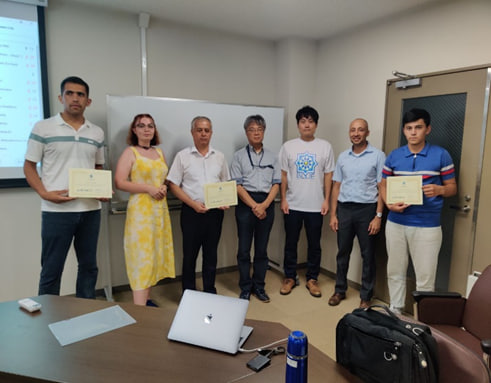
On July 17-28, training courses were held in Japan within the framework of the “Satreps Blue” project together with Japanese partner universities.
Within the SATREPS Uzbekistan-Japan project, training courses with Japanese partner universities were held in Japan on July 17-28, 2023 with the support of JICA. The training courses were organized by the head of the SATREPS-BLUE project, Kyoto University professor Kenji Tanaka and Tottori University professor K. N. Toderich. The SATREPS-BLUE project’s Hydrometeorological Research Institute, National University of Uzbekistan, Tashkent Institute of Irrigation and Agricultural Mechanization Engineers, UzGIP, Solar Institute, Institute of Botany of the UzR FA, Institute of Biorganic Chemistry of the UzR FA, Karakalpak State University, Karakalpakstan Agriculture and Agro-Technology took part in the training courses. Institute, 15 Uzbek participants – scientists, young researchers and students from the Aralboyi International Innovation Center.
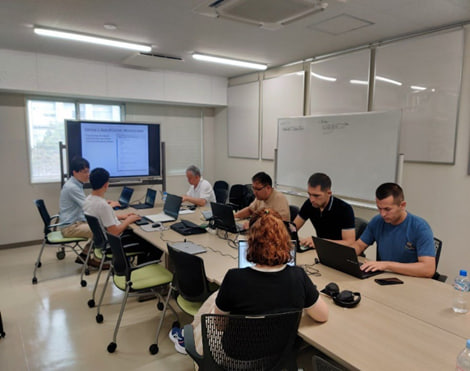
The participants of the training were divided into small groups according to the project directions and worked directly with the main Japanese partners in the laboratories of the universities. The contents of the training courses, covering all components of the SATREPS project, were organized by professors of Japanese universities who are participants of the Uzbekistan-Japan project in the form of theoretical lectures and laboratory exercises. Practical training in groups was held in 4 cities of Japan: Kyoto University, Mie University, Kobe University and Tottori University. The participants of training from GMITI at Kyoto University acquired skills in using data from geostationary satellites (Meteostat i MSG1) in monitoring dust and sand storms, processing meteorological and hydrological data using modern methods.
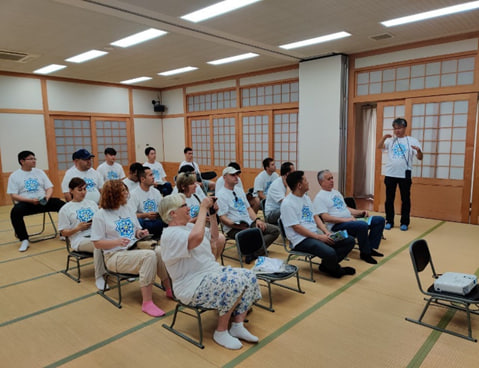
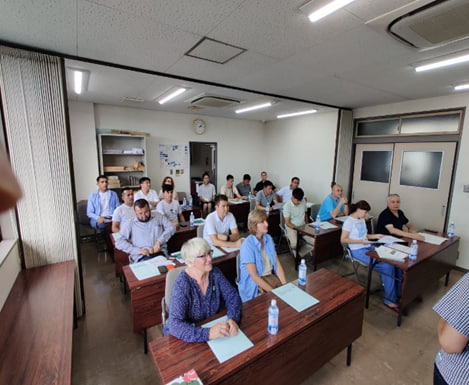
A two-day practical field training was organized for the training participants in Shiga Prefecture, and it demonstrated the closed system of rice farming and aquaculture in the direction of sustainable use of water resources, the production and processing, logistics and marketing system, and the water resources use system of Lake Biwa and its surrounding rivers. It should be noted that the training courses were an important step in increasing the scientific potential of young specialists.