EFFECTIVENESS OF GEOTEXTILE COVER TESTED ON THE MIDDLE BARKRAK GLACIER
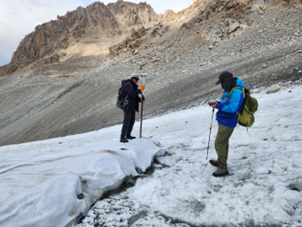
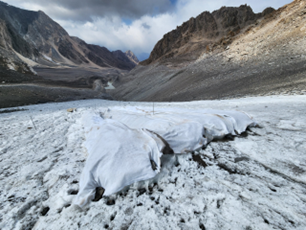
As part of the Geoengineering Project implemented by the Research Institute of Hydrometeorology, experimental field studies aimed at reducing ice melt were conducted on the Barqiroq Glacier in the Pskem River basin. Within the framework of the experiment, an area of 100 m² of the glacier surface was covered with a special geotextile material.
To ensure the scientific validity of the experiment, an open, uncovered control area was established alongside the area covered with geotextile. Special measuring stakes were installed at both sites to monitor changes in the elevation of the ice surface over time. This made it possible to compare the melting processes occurring beneath the geotextile cover with those observed on the exposed glacier surface.
On 24 September 2026, follow-up field observations and measurements were carried out on the Middle Barkrak Glacier. Measurements were taken from the installed stakes, and the condition of the experimental site was assessed.
The preliminary measurement results showed a positive effect. The amount of ice melt at the area covered with geotextile was approximately 40% lower than that observed on the exposed glacier surface. This result indicates that the geotextile cover can reduce the impact of solar radiation on the glacier surface and thereby slow down the ablation process.